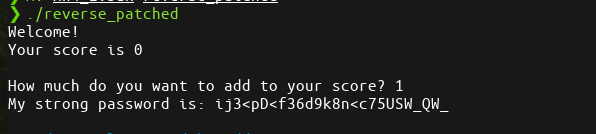
Bypassing Hardcoded Limits via Assembly Modification
This writeup details the process of reverse engineering a binary to locate and modify a hardcoded threshold constraint. By locating the specific condition check within IDA Pro, we can patch the immediate value directly in the assembly instruction to significantly alter the binary’s execution flow.
Phase 1: Identifying the Target Constraint
The initial phase involves running the binary and analyzing its behavior to pinpoint where the restriction occurs.
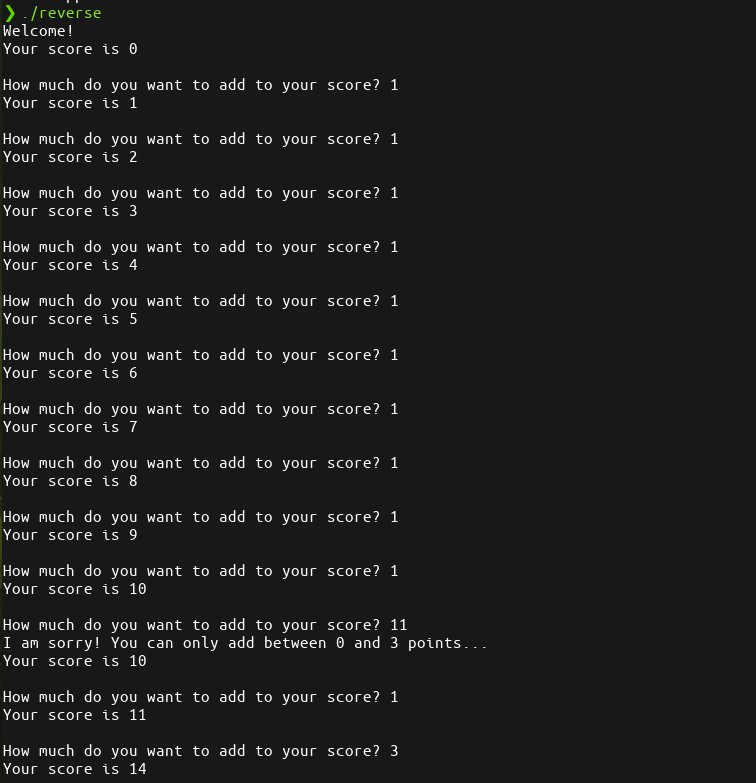
Once the high-level restriction is observed, we trace the internal functions to find where this logic is handled within the application structure.
Phase 2: Static Analysis in IDA Pro
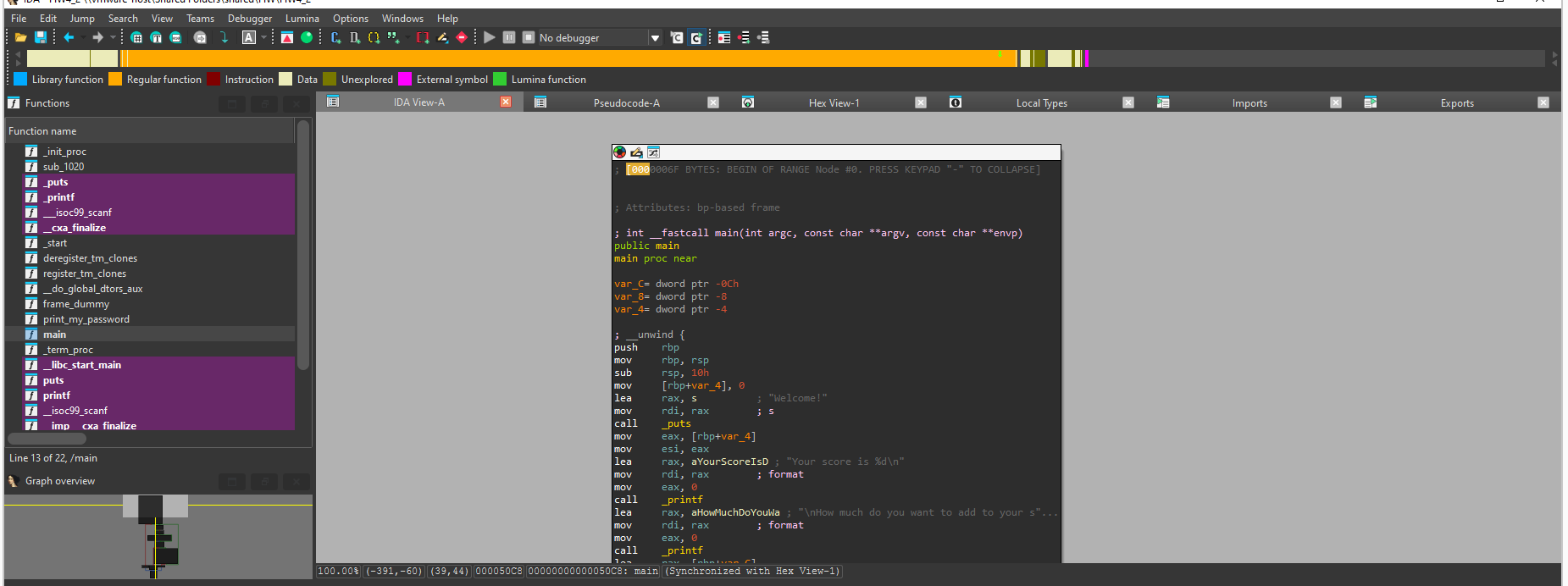
Loading the executable into IDA Pro allows us to examine the disassembly and map out the control flow graph.
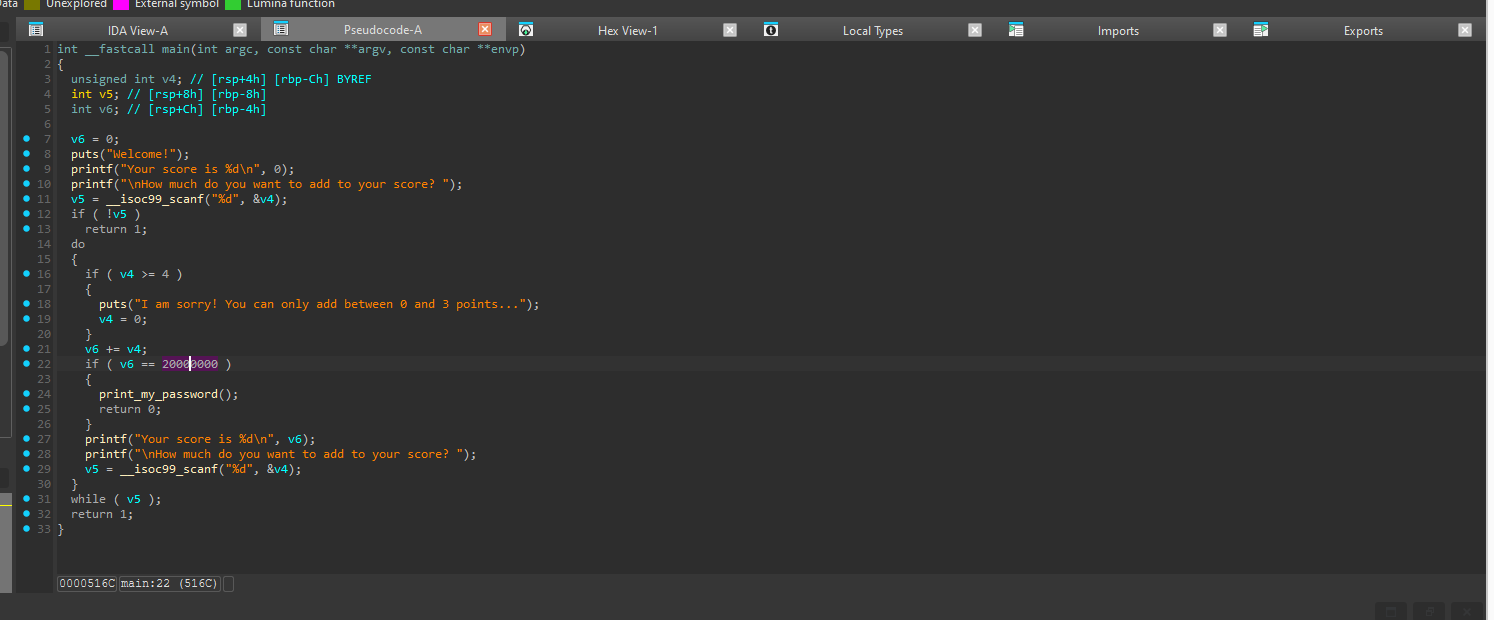
To speed up comprehension of the validation routine, we generate the decompiled pseudo-code. This clearly exposes a comparison or loop condition running against a large threshold value.
With the pseudo-code providing the logical context, we switch back to the graph view to map those high-level variables directly to hardware registers and memory addresses.
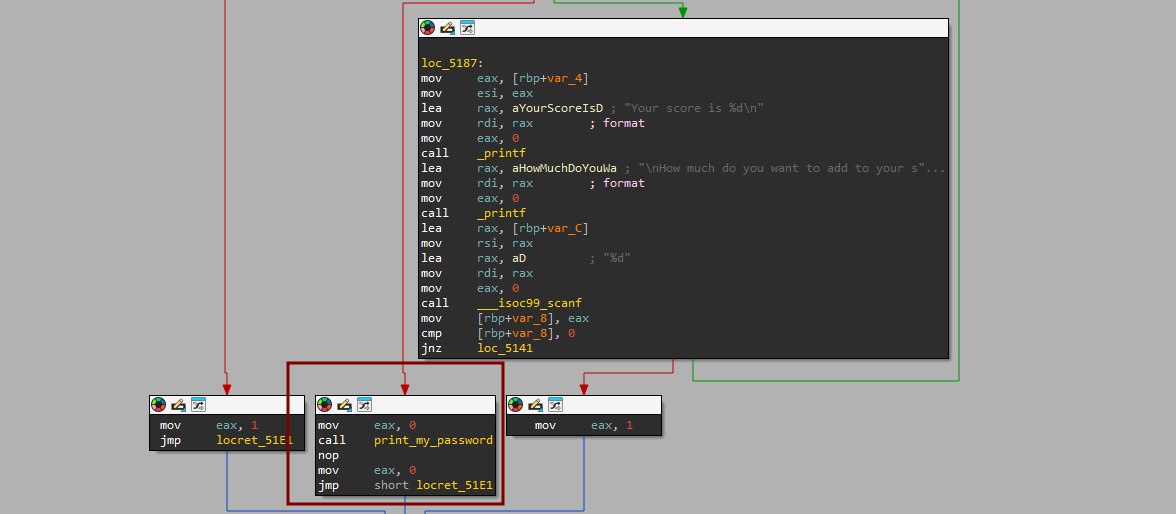
Phase 3: Pinpointing the Comparison Instruction
Here we find the exact target: a cmp (compare) instruction checking a register against the hex value 1312D00h.
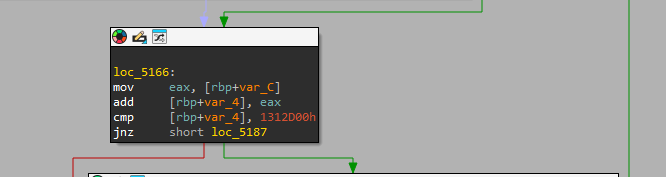
Converting 1312D00h to decimal yields exactly 20000000, matching our target hardcoded limit.
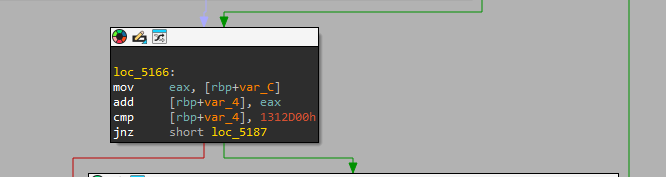
Phase 4: Patching the Binary
To bypass or accelerate this process, we use IDA Pro’s built-in patching functionality (Edit -> Patch program -> Change byte) to modify the instruction’s immediate value.
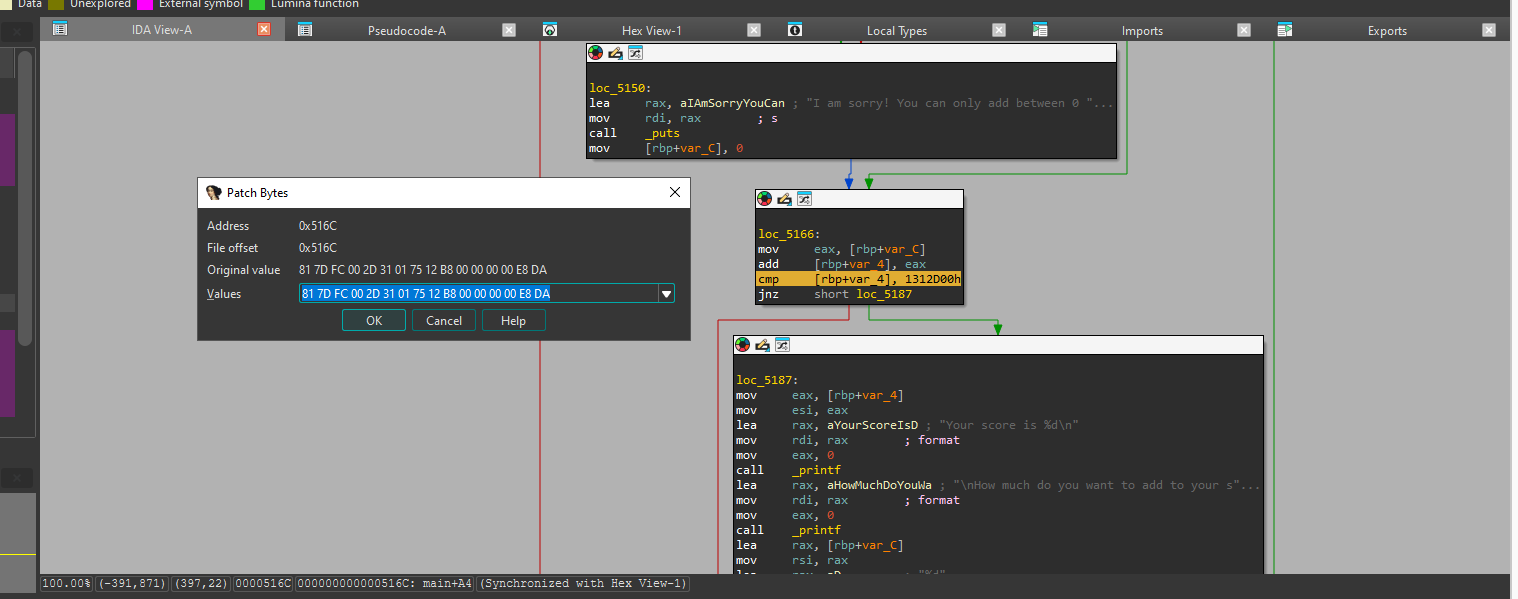
We overwrite the original value with a significantly smaller hex integer, lowering the execution threshold and causing the condition to trigger much earlier than originally intended.
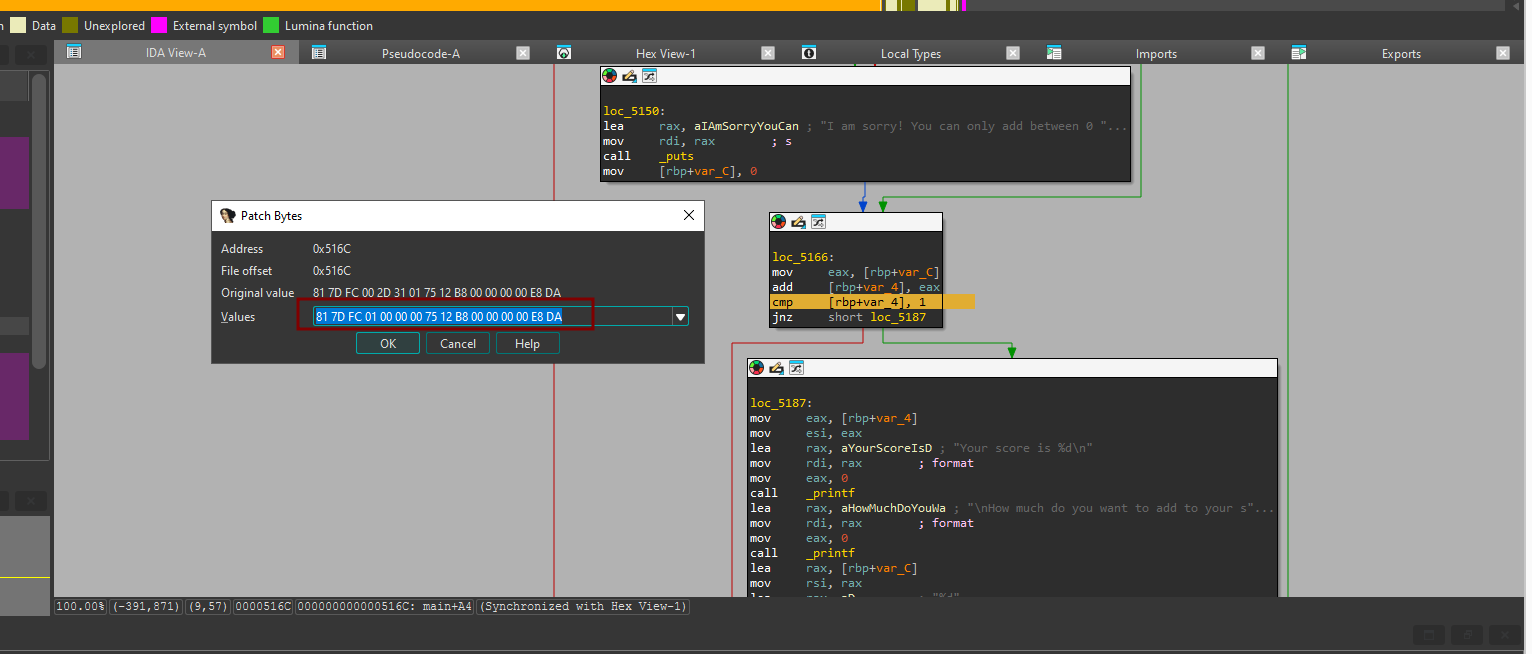
Finally, we verify that the modification is correctly applied within the disassembly graph. The binary is now ready to be exported with the modified behavior intact.